
Big in Japan – an interview with Square Enix
In Japan you don’t get much bigger than Square Enix and, at Square Enix, you don’t get much more influential than Yoshinori Kitase – the Director of the monstrously successful and popular Final Fantasy VII on the original PlayStation.
Now as the prequel to the original is released in Europe on the PSP, titled Crisis Core, we sat down with Yoshinori Kitase to talk things through. Kitase-san served as the executive producer of Crisis Core and joining him throughout our interview is Hideki Imaizumi, the producer of the game.
How has life changed after FFVII, what does Square Enix think of the PSP and just why did the game take so long to make and translate for European audiences? We found out...
Bit-tech: How hard did you find it to write a story where the ending is already known to the players?
Hideki Imaizumi: Well, when it comes to building a story around an ending that is inevitable then there is enormous pressure around it, but it’s actually very fun.
It’s kind of like historical figures – we all know how certain people died and lived, but films about them are always difference because they show the story from a different perspective. Everyone knows how Caesar died, but it changes every time because of how it is presented. The challenge here then was to develop a story that seamlessly ties in to Final Fantasy VII and the backstory there. We had a lot of fun doing that.
BT: What exactly inspired you to write a prequel to Final Fantasy VII in the first place though?
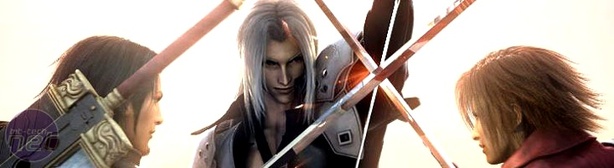
HI: Well, when you talk about inspiration then obviously the original game was the greatest inspiration. Specifically though, there’ve been several compilation titles though that bring together characters…In terms of this project though it was Zack who was the greatest inspiration.
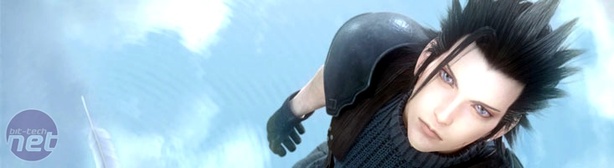
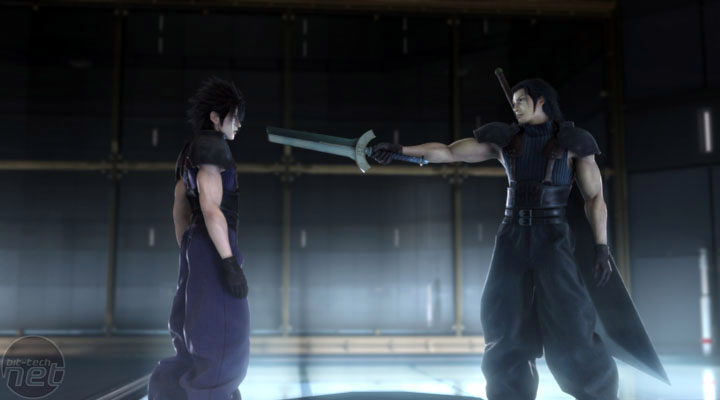
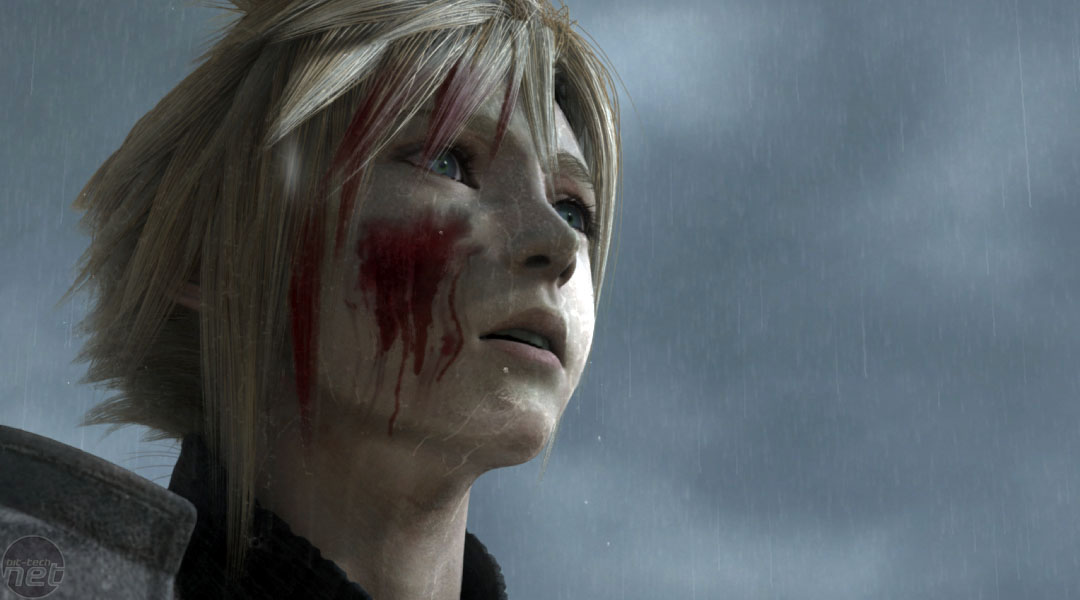
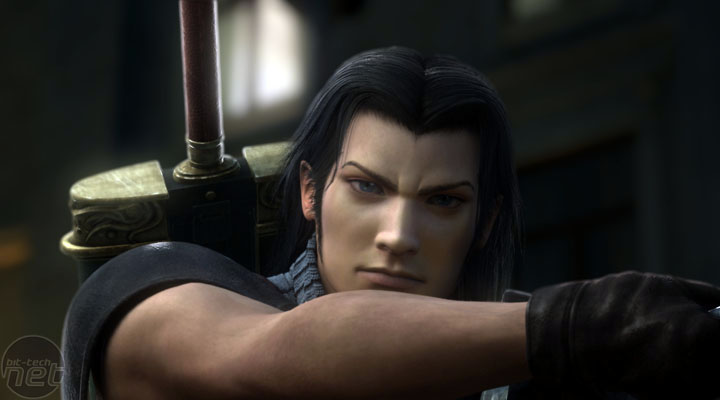
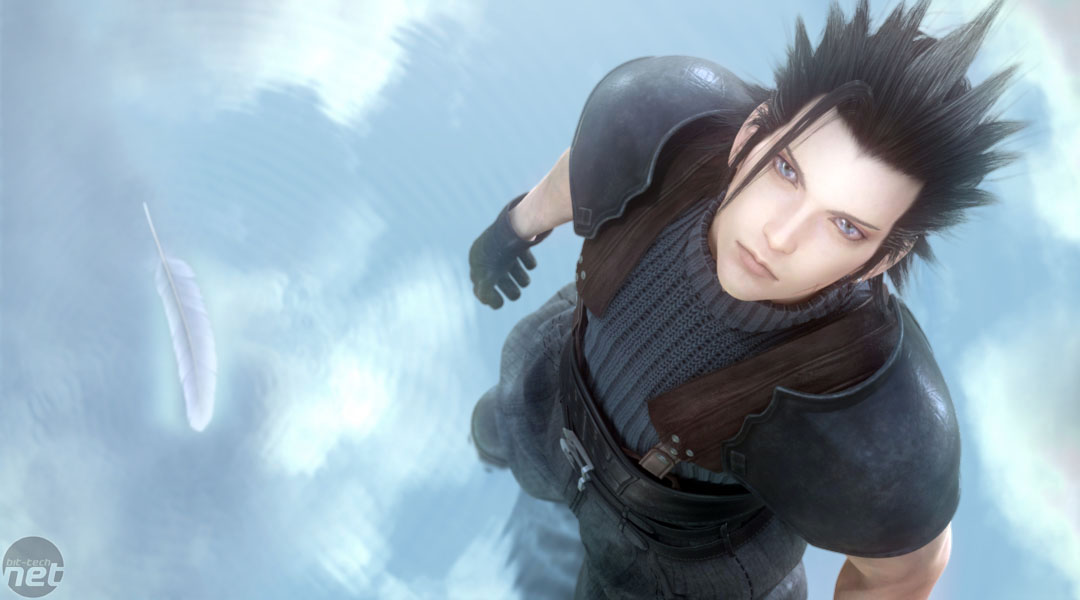
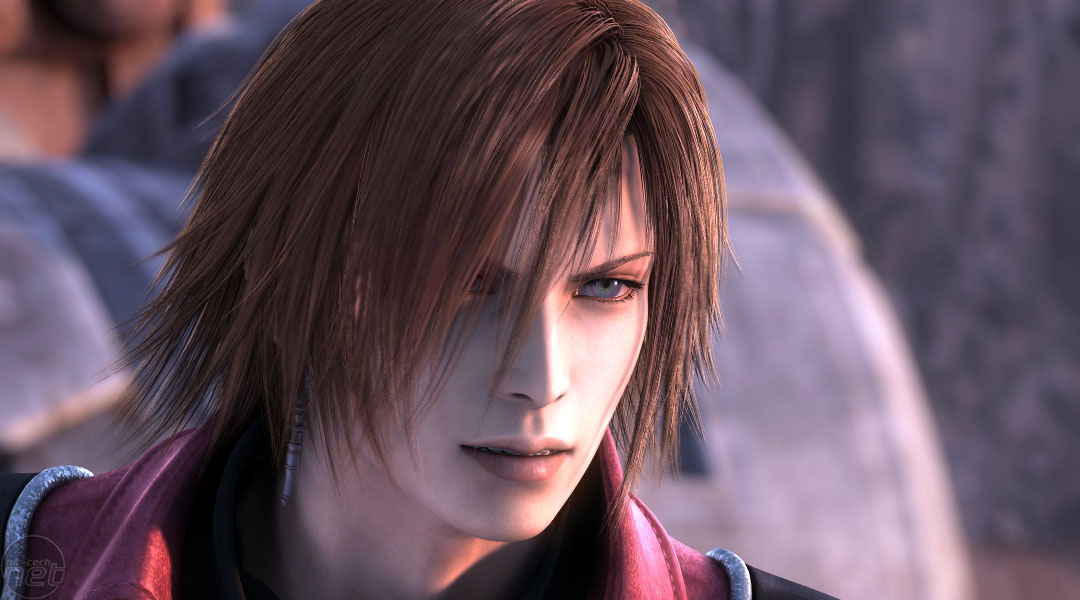
Zack is the main character of Crisis Core and we felt that because he was oddly such a minor character in the original game, though one who held so much importance to Cloud and had a huge impact on his life, that there was a lot to say about him.
With such huge potential behind Zack, we felt that telling his story would be a great way to enrich the first game.
BT: Why did you choose to develop Crisis Core on the PSP rather than the PS2 or PS3?
Yoshinori Kitase: To be honest, at the time we chose hardware the PlayStation 3 wasn’t even an option. We didn’t even know when it would really be available to develop on when we came up with the concept. When we did start on the game though, we had just happened to coincide with the launch of the PSP in Japan.
We did have a whole lot of familiarity with the PlayStation 2 and could have easily made the game for that, but there was a general interest among the developers to experiment with the new hardware. We just had the motivation to explore new avenues and platforms.
BT: Is this the last game in the Final Fantasy VII series or are we to expect more prequels and sequels?
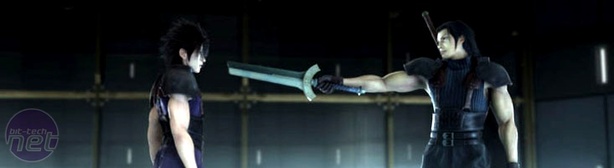
YK: Well, we’ve kind of reached a milestone here in that we’ve got to a certain level of satisfaction and the story has come full circle. Whether it is the final game in the series though we’d really rather not say – we prefer those windows of opportunity left open.
BT: When you say windows of opportunity do you mean a remake? It’s one thing that fans have been very vocal about wanting…
YK: My feelings are that if a remake were to work well then all the core members of the original team must be reassembled, all the artists and designers.
The problem is that, although all of us have an idea of what a remake should be and how to do it, organising such a thing right now is logistically very difficult. All the different members are now involved in very new, very large projects like Final Fantasy XIII and those projects are going to take a while.
Maybe, when all those games are finished then we can look at doing something like that.
Of course, that said we came up with the idea for Crisis Core in just two days. It was a case of ‘this is what we want to do, so let’s do it’. So, you can definitely expect the probability of something spontaneous happening at some point, but it’s hard to predict.
BT: We’re ten years on now and there’s been multiple Final Fantasy games since VII and yet between Dirge of Cerebus, Advent Children and Crisis Core, you’ve always returned to Final Fantasy VII. What is it about VII that you think makes it so popular and special?
YK: Well, Final Fantasy VII came out a time in a time of transition when the PlayStation 1 allowed for a whole new realm of games with improved audio and graphics. Also, at the time I was a much younger man. Ten years younger in fact – though don’t count me out just yet!
It was a time when I had all this enthusiasm and as a young creator I wanted to try and challenge the idea of what an RPG could be. Combine with that the hardware and these new realms of possibility for creators. That combination seems to have worked because although it was hard to say how successful we were at the time, ten years later the game is still being talked about and I think we really did set a new standard.
We really have a soft spot in our hearts for Final Fantasy VII because that was when we tried to change things. It was just the right time for it.

BT: You have changed things this time around though and you’ve changed the turn-based combat in for an action approach in Crisis Core – why did you choose to change it at all?
HI: The new battle system isn’t the only difference and that’s important because we’ve also got rid of the old party-based system. Crisis Core is a game that is all about Zack and the problem with that is that if you use a battle system made for parties in a game with just one character then it just doesn’t work very well. The flow is wrong you’re left forever waiting.
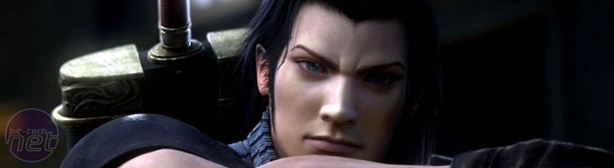
So, what we did was take some elements from the turn-based structure and incorporate some new ones. You can still cast spells and select weapons, but the new DMW battle system combines with the old Materia mechanic to keep things fresh.
It was just an obvious evolution for us based on how you keep the best bits of Final Fantasy VII while still keeping the game fresh at all times. At the same time, we wanted to take Zack, who is an incredibly elite solider, and show how he becomes more powerful as time progresses. The idea of the control system is to be direct and convey the raw power of Zack.
BT: Can you tell us more about the Digital MindWave system (DMW) and how it works? Are power-ups based utterly on chance?
HI: The concept came from us wanting to have an uncontrollable twist of fate as a core element of the game. So, you might fight a boss character twice and the first time you lose, but the second time you win because the DMW powers you up. The DMW is very random, but it can give you effects like restoring all of your HP. We really wanted to use luck to make things exciting.
At the same time though, it isn’t completely random. The levelling system ties into the DMW, but that doesn’t mean you’re going to stay at Level One just because you’re unlucky. There’s an internal XP counter that ticks up over time and tilts the DMW system in your favour. You might level up twice very quickly or once very slowly, but you can’t get stuck with it.
Also, we give players access to different Materia to use which are linked to the DMW and can be used to manipulate it.
One of the concepts I originally put forward myself, but was rejected was that…well, the number four is very unlucky in Japan. It is pronounced as Shi, which is also the word for Death. I originally put forward the idea that if four fours came up on the DMW slow system then the player would actually lose a level. As it was though, the concept was rejected and the DMW system is much fairer as a result.
BT: Given how established and popular the Final Fantasy VII universe is, were there any parts or characters which you wanted to go back and look at again specifically?
YK: Nibelheim. It was a huge part of the story in the original game and marked the turning point for many of the characters like Cloud, Sephiroth, Zack in this game and Tifa to a degree too. We really wanted to revisit that place and relay the event from a different perspective.
In fact, we took such great care to do it that we actually reused all the same camera angles as we did in Final Fantasy VII. Even though I was the executive producer, I stepped down to the role of event planner for that section and actually worked that entire section myself too. That was definitely the area we wanted to look at the closest.
BT: The main addition to the game in the European localisation is an added hard mode – why exactly did you think to add that in for European players specifically?
HI: Initially, when we released the Japanese version we didn’t include the hard mode because we wanted everyone to be able to play the game and have it as accessible as possible.
However, we soon found that we didn’t need to try to do that so much and that many more people were in tune with the action basis of the game than we thought.
In fact, people were able to exploit the game and achieve much more than we expected even at a very low skill level. So, once we got ready to move it out into other territories we felt that even more players would be able to do this. To help make the system more challenging then we added the hard mode.
I should warn you though that the hard mode is really very punishing as a result. It’s almost not like playing the same game at all and things take so long to die that it’ll only satisfy the hardest of the hardcore.
BT: The game was originally announced four years ago – why exactly did it take so long to get out the door?

YK: Well, to start with we just announced the game far, far too early. It’s something we promise to work on in the future.
Also, y’see…for E3 2004 we needed to show something of the game off and in building a demo we found we’d really underestimated the game and found it was very similar to the PlayStation 2. The PSP had only just come out and building the demo was such a learning experience that we found we could do so much more with the hardware than we expected.
The downside of that is that we ended up setting an extra hurdle for ourselves and taking longer to make something we felt was better – that’s really all it was.
In Japan you don’t get much bigger than Square Enix and, at Square Enix, you don’t get much more influential than Yoshinori Kitase – the Director of the monstrously successful and popular Final Fantasy VII on the original PlayStation.
Now as the prequel to the original is released in Europe on the PSP, titled Crisis Core, we sat down with Yoshinori Kitase to talk things through. Kitase-san served as the executive producer of Crisis Core and joining him throughout our interview is Hideki Imaizumi, the producer of the game.
How has life changed after FFVII, what does Square Enix think of the PSP and just why did the game take so long to make and translate for European audiences? We found out...
Bit-tech: How hard did you find it to write a story where the ending is already known to the players?
Hideki Imaizumi: Well, when it comes to building a story around an ending that is inevitable then there is enormous pressure around it, but it’s actually very fun.
It’s kind of like historical figures – we all know how certain people died and lived, but films about them are always difference because they show the story from a different perspective. Everyone knows how Caesar died, but it changes every time because of how it is presented. The challenge here then was to develop a story that seamlessly ties in to Final Fantasy VII and the backstory there. We had a lot of fun doing that.

BT: What exactly inspired you to write a prequel to Final Fantasy VII in the first place though?
HI: Well, when you talk about inspiration then obviously the original game was the greatest inspiration. Specifically though, there’ve been several compilation titles though that bring together characters…In terms of this project though it was Zack who was the greatest inspiration.
Zack is the main character of Crisis Core and we felt that because he was oddly such a minor character in the original game, though one who held so much importance to Cloud and had a huge impact on his life, that there was a lot to say about him.
With such huge potential behind Zack, we felt that telling his story would be a great way to enrich the first game.
BT: Why did you choose to develop Crisis Core on the PSP rather than the PS2 or PS3?
Yoshinori Kitase: To be honest, at the time we chose hardware the PlayStation 3 wasn’t even an option. We didn’t even know when it would really be available to develop on when we came up with the concept. When we did start on the game though, we had just happened to coincide with the launch of the PSP in Japan.
We did have a whole lot of familiarity with the PlayStation 2 and could have easily made the game for that, but there was a general interest among the developers to experiment with the new hardware. We just had the motivation to explore new avenues and platforms.
BT: Is this the last game in the Final Fantasy VII series or are we to expect more prequels and sequels?
YK: Well, we’ve kind of reached a milestone here in that we’ve got to a certain level of satisfaction and the story has come full circle. Whether it is the final game in the series though we’d really rather not say – we prefer those windows of opportunity left open.
BT: When you say windows of opportunity do you mean a remake? It’s one thing that fans have been very vocal about wanting…
YK: My feelings are that if a remake were to work well then all the core members of the original team must be reassembled, all the artists and designers.
The problem is that, although all of us have an idea of what a remake should be and how to do it, organising such a thing right now is logistically very difficult. All the different members are now involved in very new, very large projects like Final Fantasy XIII and those projects are going to take a while.
Maybe, when all those games are finished then we can look at doing something like that.
Of course, that said we came up with the idea for Crisis Core in just two days. It was a case of ‘this is what we want to do, so let’s do it’. So, you can definitely expect the probability of something spontaneous happening at some point, but it’s hard to predict.
BT: We’re ten years on now and there’s been multiple Final Fantasy games since VII and yet between Dirge of Cerebus, Advent Children and Crisis Core, you’ve always returned to Final Fantasy VII. What is it about VII that you think makes it so popular and special?
YK: Well, Final Fantasy VII came out a time in a time of transition when the PlayStation 1 allowed for a whole new realm of games with improved audio and graphics. Also, at the time I was a much younger man. Ten years younger in fact – though don’t count me out just yet!
It was a time when I had all this enthusiasm and as a young creator I wanted to try and challenge the idea of what an RPG could be. Combine with that the hardware and these new realms of possibility for creators. That combination seems to have worked because although it was hard to say how successful we were at the time, ten years later the game is still being talked about and I think we really did set a new standard.
We really have a soft spot in our hearts for Final Fantasy VII because that was when we tried to change things. It was just the right time for it.
BT: You have changed things this time around though and you’ve changed the turn-based combat in for an action approach in Crisis Core – why did you choose to change it at all?
HI: The new battle system isn’t the only difference and that’s important because we’ve also got rid of the old party-based system. Crisis Core is a game that is all about Zack and the problem with that is that if you use a battle system made for parties in a game with just one character then it just doesn’t work very well. The flow is wrong you’re left forever waiting.
So, what we did was take some elements from the turn-based structure and incorporate some new ones. You can still cast spells and select weapons, but the new DMW battle system combines with the old Materia mechanic to keep things fresh.
It was just an obvious evolution for us based on how you keep the best bits of Final Fantasy VII while still keeping the game fresh at all times. At the same time, we wanted to take Zack, who is an incredibly elite solider, and show how he becomes more powerful as time progresses. The idea of the control system is to be direct and convey the raw power of Zack.
BT: Can you tell us more about the Digital MindWave system (DMW) and how it works? Are power-ups based utterly on chance?
HI: The concept came from us wanting to have an uncontrollable twist of fate as a core element of the game. So, you might fight a boss character twice and the first time you lose, but the second time you win because the DMW powers you up. The DMW is very random, but it can give you effects like restoring all of your HP. We really wanted to use luck to make things exciting.
At the same time though, it isn’t completely random. The levelling system ties into the DMW, but that doesn’t mean you’re going to stay at Level One just because you’re unlucky. There’s an internal XP counter that ticks up over time and tilts the DMW system in your favour. You might level up twice very quickly or once very slowly, but you can’t get stuck with it.
Also, we give players access to different Materia to use which are linked to the DMW and can be used to manipulate it.
One of the concepts I originally put forward myself, but was rejected was that…well, the number four is very unlucky in Japan. It is pronounced as Shi, which is also the word for Death. I originally put forward the idea that if four fours came up on the DMW slow system then the player would actually lose a level. As it was though, the concept was rejected and the DMW system is much fairer as a result.
BT: Given how established and popular the Final Fantasy VII universe is, were there any parts or characters which you wanted to go back and look at again specifically?
YK: Nibelheim. It was a huge part of the story in the original game and marked the turning point for many of the characters like Cloud, Sephiroth, Zack in this game and Tifa to a degree too. We really wanted to revisit that place and relay the event from a different perspective.
In fact, we took such great care to do it that we actually reused all the same camera angles as we did in Final Fantasy VII. Even though I was the executive producer, I stepped down to the role of event planner for that section and actually worked that entire section myself too. That was definitely the area we wanted to look at the closest.
BT: The main addition to the game in the European localisation is an added hard mode – why exactly did you think to add that in for European players specifically?
HI: Initially, when we released the Japanese version we didn’t include the hard mode because we wanted everyone to be able to play the game and have it as accessible as possible.
However, we soon found that we didn’t need to try to do that so much and that many more people were in tune with the action basis of the game than we thought.
In fact, people were able to exploit the game and achieve much more than we expected even at a very low skill level. So, once we got ready to move it out into other territories we felt that even more players would be able to do this. To help make the system more challenging then we added the hard mode.
I should warn you though that the hard mode is really very punishing as a result. It’s almost not like playing the same game at all and things take so long to die that it’ll only satisfy the hardest of the hardcore.
BT: The game was originally announced four years ago – why exactly did it take so long to get out the door?
YK: Well, to start with we just announced the game far, far too early. It’s something we promise to work on in the future.
Also, y’see…for E3 2004 we needed to show something of the game off and in building a demo we found we’d really underestimated the game and found it was very similar to the PlayStation 2. The PSP had only just come out and building the demo was such a learning experience that we found we could do so much more with the hardware than we expected.
The downside of that is that we ended up setting an extra hurdle for ourselves and taking longer to make something we felt was better – that’s really all it was.
courtesy of bit-tech.net
Last edited:


 Or megablocks FF7, and their heads fall off a lot.